Conference Keynote Speaker I
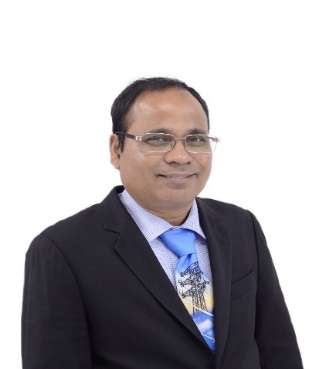
Prof. Bikash C. Pal
Imperial College, London, UK
Speech Title:
Power Swings Under Grid-forming Converters Current Limi
Abstract:
The number of power electronics converters connected to electrical networks has been growing exponentially as they are part of all new generation connected to the grid. While the rapid control and fast electronic switching available with this technology offer flexibility in network operation, their performances during network disturbance is limited by their ability to support large fault current. It is required to develop a methodology to analyse their control effectiveness during and immediately after the network events.
The talk will focus on an analytical modelling framework for grid-forming converters in the current-saturation mode. It will further delve into how that framework is useful to understand the pathways to current limit, converter behavior while on the limit and associated challenges imposed on its grid stability contribution and protection performance. The talk will finally touch upon control measures to make power swing stability and protection functions. Future research challenges and opportunities will be highlighted.
Bio:
Bikash Pal is a Professor of Power Systems at Imperial College London (ICL). He has his BEng degree (1990) from Jadavpur University (1990), and MEng degree (1992) in power engineering from The Indian Institute of Science, Bangalore and a PhD degree (1999) from Imperial College London as a Commonwealth Scholar. He is research active in power system stability, control, and estimation. He led three multinational and multi universities research collaboration between UK-China and UK-India in renewable energy integration and control. His research is conducted in strategic partnership with ABB, SIEMENS, GE Grid Solutions, UK, and National Grid, UK. UK Power Networks. SIEMENS R&D collaborated with him to develop fast power flow and volt-var control tools in Spectrum Power, an advanced module for distribution management system solution from SIEMENS running many power distribution utilities around the world. GE commissioned sequel of projects with him to analyse and solve wind farm HVDC grid interaction problems (2013-2019). Prof Pal was the chief technical consultant for a panel of experts appointed by the UNFCCC CDM (United Nations Framework Convention on Climate Change Clean Development Mechanism). He has offered trainings in Chile, Qatar, UAE, Malaysia and India in power system protections, stability and control topics. He has developed and validated a prize winning 68-bus power system model, which now forms a part of IEEE Benchmark Systems as a standard for researchers to validate their innovations in stability analysis and control design. He has published about 140 papers in IEEE Transactions and authored four books in power system modelling, dynamics, estimations and control.
In 2016, his research team won the President’s outstanding research team award at Imperial College London (ICL). He is a Fellow of IEEE for his contribution to power system stability and control. He is a Fellow of the Chinese Society of Electrical Engineers and a Fellow of The IET UK. He received 2025 IEEE PES Prabha Kundur Power System Dynamics and Control Award for his technical contribution to power system control and estimation. He is elected a Fellow of The Royal Academy of Engineering, UK in 2023 for the impact of his contribution to the field of power engineering. He is elected as a foreign member of Chinese Academy of Engineering and Indian National Academy of Engineering in 2025. He is an IEEE Distinguished Lecturer in power distribution system estimation and control. He was Otto Monsted Professor at Denmark Technical University (DTU) (2019) and Mercator Professor sponsored by German Research Foundation (DFG) at University of Duisburg-Essen in 2011. He was the Editor-in-Chief of IEEE Transactions on Sustainable Energy (2012-2017) and Editor-in-Chief of IET Generation, Transmission and Distribution (2005-2012). He was Vice President, PES Publications (2019-2023). He is elected as IEEE Power and Energy Society President Elect (2026-2027) for the office of The President in 2028-2029.
Beyond his
profession, he has founded KAJALBABU MEMORIAL
TRUST, an education charity in India to mentor
children from economically disadvantaged
background.
Conference Keynote Speaker II
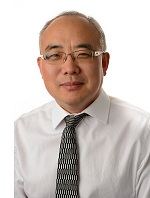
Prof. Zhaoyang Dong
City University of Hong Kong, Hong Kong, China
Speech Title:
TBA
Abstract:
TBA
Bio:
Prof Z.Y. Dong is a Chair Professor and Head of Department of Electrical Engineering at City University of Hong Kong. His previous roles include Singapore Power Group Endowed Professor and Co-Director of SPG-NTU Joint Lab at Nanyang Technological University, Singapore; SHARP Professor of Energy System and Inaugrial Director of UNSW Digital Grid Futures Institute, the University of NSW, Australia; Director of ARC Research Hub for Integrated Energy Storage Systems; Head of School of Electrical & Information Engineering, The University of Sydney; and Ausgrid Chair Professor and Director of Ausgrid Centre for Intelligent Electricity Networks provided R&D support for the Smart Grid, Smart City national demonstration project of Australia. He also worked with industry as manager for power system planning with the transmission network service provider of TAS in Australia. Prof Dong's research interests include power system planning and stability, smart grid/micro grid, smart cities, renewable energy systems, energy storage systems, and energy market. He is a Fellow of IEEE and has held editorial roles for several IEEE Transactions and IET Journals.
Conference Keynote Speaker III
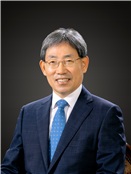
Prof. Chul-Hwan Kim
Sungkyunkwan University, Korea
Speech Title:
AC/DC Hybrid Distribution Systems: Recent Trend and Approaches
Abstract:
As DC power sources and DC loads are connected to the power system on a large scale, the conventional AC distribution systems are reaching their limitations. In response, medium-voltage DC (MVDC) distribution systems are emerging as an alternative for the next-generation distribution system. In Republic of Korea, the goal is to operate an AC/DC hybrid distribution system by 2030, and partially replacing existing AC distribution system with DC distribution system is being considered. With the same conductor and insulation ratings, a DC line can transmit roughly twice the power of an AC line. Medium-voltage DC (MVDC) distribution is also expected to substantially increase the hosting capacity for renewable resources, DC sources, and DC loads. Operationally, MVDC avoids frequency-related stability constraints, experiences lower voltage drop and reduced losses because reactive power is absent, enables more efficient integration of DC sources and loads through direct interconnection, and improves overall asset utilization by enabling controllable power flows via power-electronic converters.
Bio:
Prof. Chul-Hwan Kim is an IEEE Fellow,
KIEE Fellow and earned his B. S., M. S., and Ph.
D. degrees in electrical engineering from
Sungkyunkwan University, Seoul, Korea, in 1982,
1984, and 1990, respectively. In 1996, 1998, and
1999, he was a visiting academic at the
University of Bath, U.K. Currently, he serves as
a professor at School of Electrical and
Electronics Engineering of Sungkyunkwan
University, Seoul, Korea(south). He was
technical program committees co-chair of
IPST(International Conference on Power System
Transients) 2023 and the local program committee
chair of IPST 2017. Also, he is a steering
committee member of IPST. He was president of
Power Engineering Society of KIEE and Korea
Institute of Electrical Engineers(KIEE, 50th) in
2018 and 2021, respectively. Furthermore, since
2008, he is a member of technical review panel
of an international conference on Developments
in Power System Protection (DPSP) organized by
IET, U.K. Furthermore, he serves as an esteemed
editorial board member for IEEE Power and Energy
magazine, International Journal of Electrical
Power & Energy Systems (IJEPES), and Protection
and Control of Modern Power Systems.
Additionally, he holds the role of editor in
Electrical Power Systems Research (EPSR) at
Elsevier. His research includes power system
protection, transients, distributed renewable
generation, and analysis and protection of MVDC,
and LVDC systems.
Conference Invited Speaker I
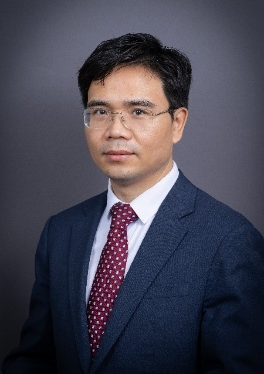
Qin Wang
The Hong Kong Polytechnic University, China
Speech Title:
Solving AC Optimal Power Flow Problems with Gradient-Guided Physics-Informed Neural Networks
Abstract:
The alternating current optimal power flow (AC-OPF) is a core problem in power system operation and planning. Although traditional numerical optimization methods are accurate, they are computationally intensive and struggle to meet the demands of real-time decision-making. To address this, data-driven deep learning approaches, particularly supervised learning based on Artificial Neural Networks (ANNs), have been extensively researched to achieve fast AC-OPF solutions. However, purely supervised ANN methods have a fundamental limitation: their training relies entirely on offline generated data and lacks an intrinsic understanding of the physical laws governing power systems. This results in inadequate generalization capability and may produce physically infeasible or even insecure operational results. This presentation will introduce a gradient-guided physics-informed neural networks (PINN) method to solve the AC-OPF problems. The framework features a sequential dual-network architecture composed of an AC-OPF solver network and an AC power flow evaluator network. The feasibility of the proposed method is demonstrated with several case studies.
Bio:
Dr. Qin Wang is currently an Associate Professor in the Department of Electrical and Electronic Engineering at The Hong Kong Polytechnic University. He obtained his Bachelor's degree from Huazhong University of Science and Technology in 2006, his Master's degree from South China University of Technology in 2009, and his Ph.D. from Iowa State University in 2013. Before joining The Hong Kong Polytechnic University, he worked for over 10 years in power grid companies, laboratories, and research institutes in the United States, including the Midcontinent Independent System Operator (MISO), the National Renewable Energy Laboratory (NREL) of the U.S. Department of Energy, the Electric Power Research Institute (EPRI), and General Motors. His research areas include power system security and reliability, integration of renewable energy, smart distribution systems, transactive energy, electric vehicle V2X, virtual power plants, and electricity markets. He currently serves as an editor for four academic journals, including IEEE Transactions on Power Systems, IEEE Transactions on Energy Markets, Policy and Regulation, Journal of Energy Engineering and IET Energy Conversion and Economics.
Conference Invited Speaker II
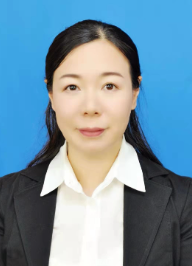
Yanhong Luo
Northeastern University, China
Speech Title:
TBA
Abstract:
TBA
Bio:
Yanhong Luo is a Professor and Doctoral Supervisor with Northeastern University. She is selected in the National Youth Talent Plan, the Standing Director of IEEE PES (China) Smart Grid and Artificial Intelligence Sub-Committee, and the Vice Chairman of IEEE Adaptive Dynamic Programming and Reinforcement Learning Technical Committee (2015-2016). She has published more than 130 papers, of which 7 are ESI Highly Cited Papers, 70 are indexed by SCI. She has also published 2 monographs, and more than 20 national invention patents are authorized. She has been engaged in the research of adaptive dynamic programming, distributed optimal control of energy Internet, high proportional accommodation of distributed energy, aggregation and optimization of virtual power plants, etc. She has undertaken 5 projects of National Natural Science Foundation Projects and National Key R&D Projects, as well as more than 20 projects in large-scale electric power enterprises. She has won the Andrew P. Sage Best Paper Award of the IEEE SMC Society in 2015 and the Best Paper Award of International Journal “Guidance, Navigation and Control” in 2022. She has also won the Second Prize of National Natural Science Award of China in 2020 (ranked second), the First Prize of Natural Science Award of Chinese Association of Automation in 2017, the First Prize of Scientific and Technological Progress Award of Chinese Association of Automation in 2020, the First Prize of Natural Science Award of Liaoning Province in 2015 and the gold medal of 2025 Geneva International Invention Exhibition, and served as the Chairman/Keynote Speaker and the TPC member at more than 10 international conferences.
Conference Invited Speaker III
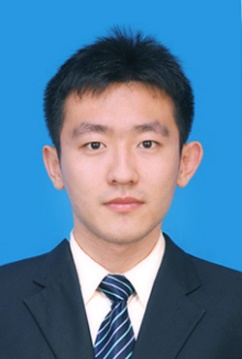
Xiaolong Li
Shenyang University of Technology, China
Speech Title:
TBA
Abstract:
TBA
Bio:
Dr. Xiaolong Li received his Ph.D. degree from Tianjin University in 2017. He worked as a Research Fellow at The University of Liverpool from 2018 to 2019. He is currently an associate professor at the School of Electrical Engineering, Shenyang University of Technology. He is also the director of The Institute of High Voltage and Power System, Deputy Director of Department of Electrical Engineering at this university. His major research interests include gas discharge, plasma physics, arc quenching technology, intelligent monitoring and fault diagnosis of switching equipment. He is a young member of the CSEE High Voltage Technical Committee and the CES Plasma and Applications Technical Committee. He is also the Deputy Secretary-General of the Sub-Technical Committee on Basic Theory of Electric Arc in IEEE PES (China).
Conference Invited Speaker IV

Zhenfei Chen
Hohai University, China
Speech Title:
TBA
Abstract:
TBA
Bio:
Zhenfei Chen, born in 1987, received
her Ph.D. degree in Electrical and Electronic
Engineering from Tianjin University, Tianjin,
China, in 2014. She is currently an associate
professor in the College of Energy and
Electrical Engineering of Hohai University,
Nanjing, China. Her current research interests
include fault detection of electrical
equipment and design of permanent-magnet
synchronous machine system. Dr. Chen has been a
member of Institute of Electrical and
Electronics Engineers (IEEE) and Power & Energy
Society (PES) since 2015. She is the referee of
several renowned academic journals, including
IEEE Transactions on Industrial Electronics,
IEEE Transactions on Magnetics, IEEE
Transactions on Applied Superconductivity,
International Journal of Applied
Electromagnetics and Mechanics, and so on. She
is also active in different kinds of academic
activities supported by IEEE societies and
international conferences.
Conference Invited Speaker
V
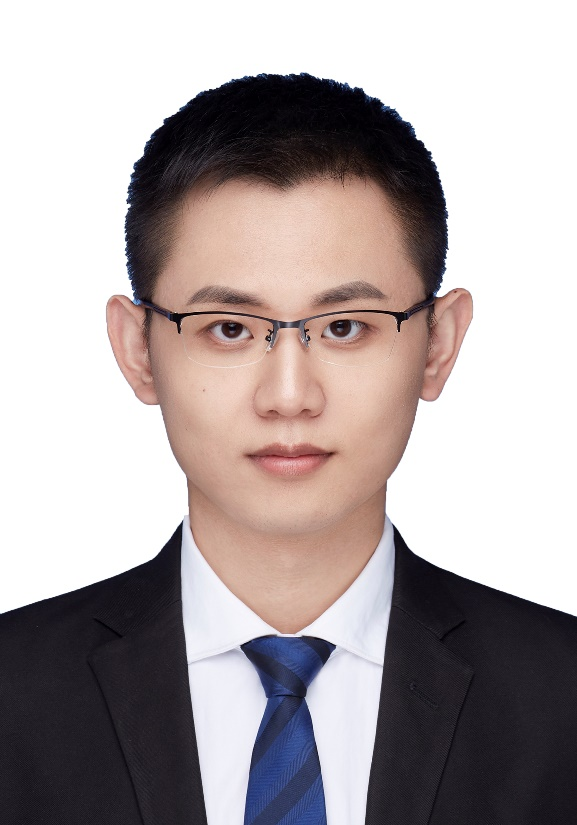
Chenhui Lin
Tsinghua University, China
Speech Title:
TBA
Abstract:
TBA
Bio:
Chenhui Lin is an Assistant Professor with the Department of Electrical Engineering at Tsinghua University. His research focuses on the renewable power system operation and the application of machine learning in power systems. He is a recipient of the Young Elite Scientists Sponsorship Program by China Association for Science and Technology. He is an associate editor of IET Renewable Power Generation, and a young editorial board member of Protection and Control of Modern Power Systems. He serves as the Program Chair of the IEEE PES Energy Internet Coordinating Committee.
Conference Invited Speaker
VI
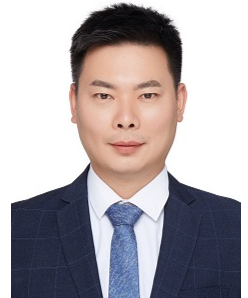
Hejun Yang
Hefei University of Technology, China
Speech Title:
TBA
Abstract:
TBA
Bio:
Dr. Hejun Yang is an Associate Professor in the School of Electrical Engineering and Automation, Hefei University of Technology, China. He received the Ph.D. degree in Electrical Engineering from Chongqing University, Chongqing, China, in 2014. He ever visited Yuan Ze University in 2012-2013 and Aalborg University in 2022-2023. He has led some research projects including the national natural science foundation of China, Anhui provincial natural science foundation, funds of the state key laboratory, the fundamental research funds for the central universities of China, etc. He has published more than 70 papers in journals (IEEE, IET, EPSR, JES, etc.) and conferences and authorized (applied) more than 60 patents. He also served as a young member of the editorial board for journals such as Protection and Control of Modern Power Systems, Power System Protection and Control, Electric Power Construction, etc. His main research interests focus on areas of power system planning and reliability, and energy storage planning and operations, new power electric distribution system operation and business models.
Conference Invited Speaker
VII
Qiushi Cui
Chongqing University & Huairou Laboratory, China
Speech Title:
From Sensing to Decision-Making: How Multimodal Large Models Reshape Predictive Maintenance and Fault Diagnosis of Power Equipment
Abstract:
To address the challenges of low efficiency and high false alarm rates in modern power system O&M, and to promote the paradigm shift from mere sensing to intelligent decision-making, an intelligent O&M system integrating multimodal large models is proposed. Targeting visual recognition difficulties in complex environments, Vision-Language Models (VLM) and Generative Adversarial Networks based on the IRMA mechanism are employed to achieve precise localization of subtle transmission line faults and high-fidelity restoration of blurred images. Addressing safety control needs in distribution network live-line operations, a real-time early warning system for behavioral violations with millisecond-level response capabilities is constructed by combining OpenPose skeleton keypoint detection with Huawei Ascend edge computing technology. For power plant equipment diagnosis, autonomous PV defect localization technology based on multi-modal image registration and an infrared thermometry environmental disturbance decoupling algorithm driven by physical mechanisms are developed to effectively resolve false alarms in unstructured environments. Ultimately, by integrating perception, memory, and reasoning modules, a Large AI Model framework for smart grid O&M is established, enabling deep mining of multi-source heterogeneous data and proactive intelligent assessment of equipment status.
Bio:
Dr. Qiushi Cui is an Associate Professor at the School of Electrical Engineering, Chongqing University , and a Research Engineer at the Smart Energy Center of Huairou Laboratory (Dual Appointment). He is a core member of Academician Wenyuan Li's team. He has been selected as a Chongqing Top Young Talent , a High-level Talent of Jiangxi Province (2023), a Distinguished Expert of the Zhejiang "Thousand Youth Talents" Plan , and a Distinguished Professor ("Eastern Scholar") at Shanghai Universities. He serves as the Chair of the Webinar Task Force for the IEEE PES Subcommittee on Big Data & Analytics for Power Systems. He holds an M.S. from Illinois Institute of Technology and a Ph.D. from McGill University. Previously, he worked as an R&D Engineer at OPAL-RT Technologies and a Postdoctoral Researcher at Arizona State University. He has led or participated in over 30 projects (including NSF and NSERC grants), published over 70 SCI/EI papers , and received four Best Paper Awards. His honors also include the Second Prize of the Science and Technology Progress Award from the Chinese Society for Optical Engineering, and Postdoctoral Fellowships from NSERC and FRQNT. Notably, he proposed a general framework for AI in grid protection for OPAL-RT and developed the world's first Hypersim microgrid system and relay protection library.
Conference Invited Speaker
VIII

Yu Wang
Chongqing University, China
Speech Title:
Cyber-physical Security Analysis and Enhancement Of Microgrids
Abstract:
Microgrids are quintessential cyber-physical systems. At the physical layer, they integrate diverse distributed energy resources and can operate in both grid-connected and islanded modes. When interconnected within power distribution networks, they form networked microgrids, which exhibit more complex dynamics and operational conditions compared to standalone microgrids. At the cyber layer, enhanced interactions through control and operational functions create a critical dependence on communication infrastructure, rendering the system vulnerable to cyber anomalies. Consequently, ensuring the cyber-physical security of microgrids is a pressing research need. Our research focuses on the coupled cyber-physical dynamics within these systems. We investigate the impact of cyber anomalies on dynamic security, specifically addressing time delays in secondary control, stability analysis under cyber-induced disturbances, and the development of resilient control strategies against such anomalies. It offers potential solutions for the security assessment and enhancement of cyber-physical microgrids in future power systems.
Bio:
Wang Yu is a Hongshen Outstanding Professor in Chongqing University. He has been selected for the "National-Level Young Talent Program" and the European Union's "Marie Skłodowska-Curie Fellowship" program. He has published over 100 papers in international journals and conferences. He serves as an editorial board member for international journals such as MPCE, IET GTD, and IET RPG, and Secretary of the IEEE PES Energy Internet Coordination Committee Working Group, Member of the New Energy and Energy Storage Systems Committee of the Chinese Association of Automation, and Member of the Smart Microgrid Committee of the Chinese Energy Society. He has been recognized as a Web of Science Highly Cited Researcher (top 1%) and included in the list of the World's Top 2% Scientists. His research focuses on power system dynamics and control, microgrid and distributed energy resources, and cyber-physical power system security.
Speakers
in 2027 to be announced soon......